NEWS
LGBTQ+

Supreme Court Leans Toward Catholic Preschools in Colorado LGBTQ Rights Case
November 4, 2026
The U.S. Supreme Court appeared ready to support Catholic preschools challenging Colorado’s anti-discrimination rules during arguments over whether religious schools should receive public preschool funding while following their beliefs about same-sex relationships and gender identity.
During Tuesday’s hearing, several conservative justices questioned Colorado’s decision to deny religious exemptions to the Archdiocese of Denver and other Catholic groups. The plaintiffs argue that the state’s universal preschool requirements violate their First Amendment right to practice their religion.
The case could have major effects on religious freedom, LGBTQ rights, and the rules that private schools must follow when accepting taxpayer-funded education assistance. The Supreme Court is expected to issue its decision by the end of June. Read More



These trans and nonbinary candidates just made history
November 4, 2026
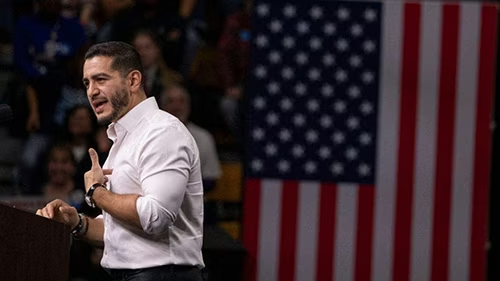
Six transgender and nonbinary candidates made history on Election Day by winning races in states that have never elected a trans person into their legislature before. These candidates will expand LGBTQ+ political power at a time when their rights are increasingly under attack nationwide. All races are called according to projections by Decision Desk HQ.
Georgia
Bentley Hudgins will be Georgia’s first nonbinary and first Japanese-American lawmaker after winning their bid to represent State House District 90 in east Atlanta. They easily defeated their opponent, Republican Samantha Boston, in the deep-blue district.
Hudgins, a 33-year-old democratic socialist, spent the last three years advocating for LGBTQ+ rights in the Georgia statehouse through their work with the Human Rights Campaign. But LGBTQ+ issues were not core to their campaign: They ran on affordability, expanding healthcare access and broadly protecting civil rights. Those issues are personal for them. As they had told The 19th, Hudgins faced homelessness and barriers to accessing care for cluster headaches and seizures. They were diagnosed as legally deaf at 19, and had to have their eardrums rebuilt. Read More


Back to Top
Race & Discrimination


Back to Top
Censorship/Book Bans


Don’t skip the school board elections; they matter more than you think
October 28, 2026
Somewhere near the bottom of your ballot, past the races for governor, Congress and the statewide propositions, is a contest you may be tempted to skip: the school board.
Many voters know little about the people running or their plans for local schools. The temptation is understandable: Skip the race and hope for the best.
Our advice: don’t.
School board elections have historically drawn low turnout, particularly when held separately from state and national elections. California moved most local elections onto statewide election dates a decade ago partly to fix that. Yet even with board races on the November ballot, many voters still leave them blank.
When voters sit these races out, they cede power to those who participate. And when relatively few people vote, small but highly motivated groups can exercise outsized influence over who sets the direction of a community’s public schools.
Why should that concern us? Read More

OPINION: Americans are losing faith in shared institutions, but public libraries are one of the few we still trust
October 26, 2026
Eye-grabbing headlines about the “end of reading” are upon us, noting that fewer than half of American adults read a book of any kind in 2022.
Yet it’s important to point out that while visits to libraries have not yet rebounded to pre-pandemic levels, they are growing, in part because their program offerings are expanding. Adults and children in the U.S. made more than 800 million visits to a library in 2023, an average of 2.2 million visits per day and nearly double the number in 2021. There are over 17,000 public library locations in the United States — more than the number of hospitals or McDonald’s.
Ask most Americans what critical infrastructure looks like, and they’ll likely describe a bridge, power grid or broadband cable. They probably won’t mention the single-room library in Donnelly, Idaho, which supports families in the remote community with after-school care, or the more than 2,600 free summer events being run by the District of Columbia Public Library System. Read More

Silent Book Club and its O.C. chapters stand behind banned titles
October 21, 2026
Started as a way of taking time out of their busy lives to enjoy the hobby they loved, the Silent Book Club, the brainchild of two busy moms who loved to read, has grown to be a space for thousands of readers across the world to enjoy the enchanting world of books.
Chapter meetings are held throughout the country, including in the Orange County cities of Huntington Beach, Newport Beach, Irvine, Tustin, Rancho Santa Margarita and others.
Now, as the November elections approach, the Silent Book Club “stands with the banned” as more books are challenged across the nation.
“Silent Book Club is a format that works across countries, cultures, languages and religion,” said Guinevere de la Mare, co-founder of the club. “It’s this sort of universal appeal of bringing people together through a shared love of books.” Read More

Escambia Schools ban 258 more books. Most were not challenged locally.
October 21, 2026
“Harriet the Spy” and “The Devil’s Arithmetic” were among 258 new books the Escambia County School Board voted to remove from schools at its Oct. 20 board meeting.
Most of the books hadn’t been challenged in Escambia schools, but rather were challenged in the Clay County School District. Twelve books, including “All’s Faire in Middle School,” “American Gods,” and “Eat, Pray, Love,” were challenged in Santa Rosa County District Schools. Book challenges also were listed from Nassau, Polk, St. Johns and St. Lucie County public schools as well.
The list also included over 40 books that were challenged in ECPS but were were not on the recommended Florida Department of Education State Objection Report.
Despite hearing mostly opposition to the blanket removal of the challenged books, board members Carissa Bergosh, Paul Fetsko, Tom Harrell and David Williams unanimously approved the measure without discussion. Read More

Opinion | We need to keep talking about banned books
October 21, 2026
A record-high number of books were “banned” in the 2025-26 school year, with nearly 12,000 books facing restrictions in at least one public school nationwide.
Banned books are not illegal to read and they can still be purchased at bookstores or retailers like The Banned Book Nook & Other Curiosities and Joseph-Beth Booksellers. The ongoing issue is that some school boards are banning books from libraries and bookstores where books are most accessible.
School and public libraries experience the most censorship of reading material. These are the institutions where people can most easily gain access to books and are the most important places to have full obtainability of published works. Read More

Stop banning books and burning the future
October 20, 2026
Banned Books Week was held earlier this month. This week draws attention to books that have been banned from schools and libraries throughout America, advocating for them to be put back on the shelves.
When books get banned, it is often for reasons of “profanity” or “violence.” Many books that get banned cover topics regarding LGBTQIA+, racial, and gender rights. The government officials, school administrators and members of communities who claim these books are “inappropriate” simply fear the messages they convey.
Nonprofit organization PEN America found that the most banned titles of the 2025-2026 school year include (but are not limited to): Patricia McCormick’s “Sold,” Laurie Halse Anderson’s “Speak,” Ellen Hopkins’s “Crank,” Margaret Atwood’s “The Handmaid’s Tale,” and John Green’s “Looking for Alaska” — among several other titles.
PEN America additionally reported that the three most banned authors include Stephen King with 312 bans, Ellen Hopkins with 240 bans and Sarah J. Maas with196 bans. Read More

Escambia school board can face questions on book bans, court says
October 20, 2026
Escambia County’s school board members can be questioned under oath why they voted to remove certain books from public school libraries, federal appeals judges said in an Oct. 19 order.
In a divided 2-1 panel in the 11th U.S. Circuit Court of Appeals, Judge Andrew Brasher wrote in the majority opinion that the school board members weren’t protected by “legislative privilege,” which protects lawmakers from having to testify about their official legislative acts.
Instead, their vote wasn’t a legislative act, but an administrative one, Brasher wrote in a 24-page court opinion: “Because these book removal votes were ‘mere administrative application of existing policies,’ they were administrative, not legislative.” Read More

Goosebumps: Ohio book banning trends truly frightening
October 20, 2026
School book ban trends come and go, but groups always want to keep their children from reading material that might expose them to new ideas or, worse, ask questions.
The problem is particularly bad in Ohio, which ranks third among the states in PEN America’s study of school book bans for the 2025-26 school year. The free-expression advocacy group counted 117 instances of school book bans in the Buckeye State during that period. Only Texas and Florida were worse. Across the country, 11,982 books — 7,370 unique titles — were banned in public schools last school year.
Not all challenged books are banned, as Axios Cincinnati reported. Its look at a Cincinnati Enquirer investigation from 2024 found 56 book challenges across nine southwest Ohio and northern Kentucky school districts alone during that period. Read More
Back to Top
Advocacy

A Teacher’s Guide to Navigating Classroom Censorship Laws
October 13, 2026
“I am not really sure if you can teach that slavery was wrong.”
That was the school district administrator’s response that signaled the end to an Iowa history teacher’s career. In 2021, Iowa had passed a “divisive concepts” law restricting school-based coverage of ideas related to race and gender. The teacher (I’ll call him “Sam Stewart”) had just asked his superintendent for guidance on how to honestly and legally teach Civil War history. The superintendent’s tentative response left the teacher feeling alone in navigating the classroom-level implications of Iowa’s law.
With his integrity at stake, he decided, “I am just going to do it anyway. I am going to teach that systemic oppression is real through history.” But then a local politician targeted Stewart in online forums, labeling him “un-American” and calling for his termination. Soon after, facing increasing harassment, Sam Stewart resigned his position and left teaching. Read More

15 months after passage, the Rhode Island Freedom to Read Act has yet to be implemented by the McKee Administration
October 19, 2026
On Monday, Rhode Island Freedom to Read advocates submitted a formal petition to the Rhode Island Department of Education (RIDE), demanding that the state implement the 2025 RI Freedom to Read Act.
Governor Daniel McKee signed the Freedom to Read Act into law on July 2, 2025, making Rhode Island a leader in providing protections to librarians, authors, educators, and readers of all ages from book bans. The motivation behind this legislation was attempted book bans here in Rhode Island to limit our school and public libraries from providing age-appropriate material to their patrons and to protect them from legal prosecution.
Fifteen months later, Rhode Island’s administration has only published half the model policies required by the law. Read More

How To Be An Informed Voter for Libraries and Books: Book Censorship News, October 16, 2026
October 16, 2026
As we more on from last week’s Banned Books Week, here’s your reminder that a week of “celebrating” banned books isn’t enough. It’s essential to now take that passion for intellectual freedom, the rights of readers, the rights of authors, and the need to protect institutions of democracy further by taking direct action.
Libraries are on the ballot this November. Libraries have always been on the ballot, but with the continued rise of book censorship and attacks on these institutions of democracy, it is more crucial than ever to show up at the polls–and it’s also vital to tell everyone else who has an election to do the same. This year’s midterms are crucial, and it’s become clear just how crucial by the escalation of attacks on books by the authoritarian regime–see the calls for accelerated and proactive bans from the Texas Lieutenant Governor and those by the DeSantis-appointed Commissioner of Education in Florida. Read More

Public education funds should serve the public
September 23, 2026
Editor:
The Colorado State Board of Education is about to decide whether public dollars can continue to fund homeschool enrichment programs that are run by outside contractors, and if so, under what limits.
We already know what happens without those limits. In the past, millions of dollars of public education funding flowed into programs with little transparency about where the money went or who benefited. Public money meant for enrichment ended up covering private school tuition and activities like ski trips and horseback riding — activities that public school families pay out of pocket.
Colorado taxpayers deserve confidence that public dollars are being used for public purposes, with clear standards, consistent oversight and full transparency. And they deserve a leader who will show up for them to demand these standards.
I’ve spent my career on the inside of Colorado public education: 30 years in a Pueblo middle school classroom, two terms on the Pueblo D60 school board, service on the CEA Board and the NEA Board of Directors and the Colorado Association of School Boards. Read More

York Human Relations Commission planning dinner to celebrate diversity
September 2, 2026
York City’s Human Relations Commission is hosting an event to bring the residents, business leaders and others together to celebrate the diversity that strengthens the city.
Jamiel Alexander, a former NAACP York President and senior fellow at the Aspen Institute, will be the keynote speaker for the dinner, which will run from 5:30 p.m. to 9 p.m. Sept. 17 at the Valencia Ballroom.
Registration is required due to limited space.
The event will offer dinner, music, networking and presentations about the Human Relations Commission’s services and mission. The hope is that those who attend the dinner will better understand the commission and how it helps residents who have experienced discrimination in housing, employment or public accommodations. Read More

Our Kids Have Rights. But Rights Aren’t Enough.
August 31, 2026
As I sent my sixth and ninth graders off for their first day of school in Los Angeles Unified School District, I had mixed feelings.
On one hand, I was looking forward to the learning, growth and new friendships ahead of them. My sixth grader put on her uniform and headed off for her first day of middle school eager to take dance and animation, continue her Spanish and start a new chapter. Meanwhile, my ninth grader began high school looking forward to her first ethnic studies class and more student activism opportunities. Last year, she got involved in the LAUSD student walkouts, the first time she joined a protest on her own.
But alongside that parental optimism, I worry about whether school will be a safe and welcoming place for all young people. Read More

Two decades ago, Dover showed how to win elections in conservative towns. They’re still fighting
July 29, 2026
It’s been 21 years since the First Amendment test case of Kitzmiller v. Dover, in which U.S. District Court judge John E. Jones III ruled that “intelligent design,” a form of revamped creationism, is unconstitutional to teach in the public schools.
While the parents who sued and science teachers celebrated, the school board members and their legal team had little to say. Looking back, most people involved in the trial said that few minds were changed. Many were just glad the national spotlight was no longer shining on Dover.
But roots run deep in south-central Pennsylvania, and history repeats itself. Some on the religious right quietly started preparing for the next opportunity.
Randall Wenger, an attorney with connections to the trial, analyzed the mistakes made by the Dover school board and set about laying out a future strategy. Wenger had unsuccessfully tried to intervene in Kitzmiller on behalf of the Foundation of Thought and Ethics, the publisher of the creationist-turned-“intelligent design” textbook Of Pandas and People. Read More

Vermont chose belonging. Let’s keep it that way.
July 11, 2026
For transgender youth and their families, the U.S. Supreme Court’s recent decision allowing state bans on transgender athletes to stand is painful and deeply disappointing. But it is important to understand what the court did — and did not — do.
The ruling upheld laws in Idaho and West Virginia, finding they do not violate the equal protection clause or Title IX. It did not create a nationwide ban on transgender athletes, nor did it require states like Vermont to change their policies. That distinction matters.
Here in Vermont, transgender students remain protected under state law. And just as importantly, our communities have chosen inclusion. The Vermont Public Accommodations Act and our strong anti-discrimination protections prohibit discrimination based on gender identity. The Vermont Principals’ Association and Vermont Agency of Education continue to affirm that students can participate in school sports consistent with their gender identity. That reflects who we aspire to be: a state where every young person is treated with dignity and has the opportunity to belong. Read More
Back to Top
Sex Education

We need stronger sexual health education — the ‘Cornell 7’ case shows why
October 7, 2026
The allegations surrounding the so-called Cornell 7 have attracted growing public attention and political scrutiny around the world, exposing persistent misunderstandings about consent and sexual violence.
According to a civil lawsuit filed by a student identified as “Jane Doe,” seven fraternity members allegedly drugged and sexually assaulted her over several hours in October 2024.
Reportedly, a Snapchat group of more than 50 fraternity members is accused of circulating photos and messages about Jane Doe during the alleged assault. One message described a woman upstairs as available for “free” sex; another member later asked “Shop still open?” and received the response, “Yea.” According to Jane Doe’s attorney, no one who saw the messages intervened to stop the assault.
Some media coverage of the case has fuelled rape myths about false reporting and contributed to victim blaming. An opinion piece in USA Today critiqued Jane Doe’s changing accounts of what happened and ended with the line: “Regretting one’s bad decisions is a far cry from rape.” Read More

Governor Shapiro Challenges Trump Administration’s Decision to Politicize Funding for Pennsylvanians’ Reproductive Health Care, Family Planning Services
August 27, 2026
Today, Governor Josh Shapiro sued(opens in a new tab) the U.S. Department of Health and Human Services (HHS) over its attempt to restrict federal funding for reproductive health care and family planning services. In July, the Trump Administration announced new terms and conditions on Title X grants for the 2027-2032 grant cycle, attempting to restrict access to reproductive health care in order advance the Trump Administration’s political agenda.
The lawsuit seeks to stop the unlawful implementation of conditions that require applicants and grantees to demonstrate “alignment” and “ongoing compliance” with the Trump Administration’s political priorities in order to apply for federal family planning dollars appropriated under Title X of the Public Health Service Act — ultimately undermining the program’s purpose and governing regulations. Read More

Northwest Pa. Schools Receive Period Product Funding
August 14, 2026
Schools across northwestern Pennsylvania will receive $201,940 in state funding to continue providing free menstrual products to students during the 2026 to 2027 school year, according to an announcement from the Pennsylvania Departments of Health and Education. The funding is part of a statewide $3 million investment included in Pennsylvania’s recently approved budget.
The allocation builds on the Shapiro Administration’s efforts to improve menstrual equity in schools. Following the state’s first-ever $3 million investment in the 2024-25 budget, Pennsylvania has now committed a total of $9 million over three consecutive budgets to ensure students have access to essential period products while at school.
The funding will be distributed automatically to qualifying school districts, intermediate units, career and technical centers, and brick-and-mortar charter schools. Schools will receive funding based on student enrollment, at a rate of $1.81 per student, and will not be required to submit applications or reimbursement requests. Read More

The new teen pregnancy prevention plan isn’t that focused on prevention
July 23, 2026
The Trump administration has a new plan for teenagers learning about pregnancy: Beginning this summer, it will steer millions of dollars toward organizations that focus on anatomy, fertility tracking, hormonal production and “reproductive goals counseling.”
The plan will also emphasize abstinence from sex and the importance of marriage.
In doing so, it will pivot away from programs that serve populations in areas with the greatest need and that use particular evidence-based programming to reduce teen pregnancies — and some say the new language puts a greater focus on planning for pregnancy rather than preventing it.
The new grant application terms are consistent with an approach called restorative reproductive medicine that has become popular among conservative groups, including those who identify with Make America Healthy Again initiatives Read More
Trump Orders Schools to Make Chilling Change to Sex Ed Programs
July 22, 2026
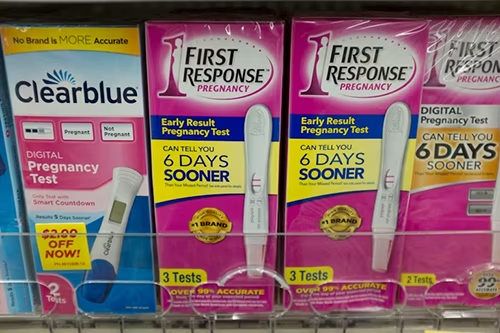
The Trump administration has canceled millions of dollars’ worth of federal grants to organizations running teen pregnancy education programs nationwide, suggesting that the widely effective underage pregnancy prevention services were inappropriately promoting premarital sex.
The funding did not align with the Office of the Assistant Secretary for Health’s outlined priorities, according to a government fact sheet that specified the office would not support “content that encourages, normalizes or promotes sexual activity for minors.”
One such organization interrogated by the assistant secretary—South Carolina nonprofit Fact Forward—was accused of including lessons with “advice on making condom use more pleasurable” and promoting discussions that normalize “use of pornography,” according to a copy of the letter obtained by The New York Times. Read More

Fewer Lancaster County teens getting pregnant; schools credit better sex education
April 27, 2025
In the 1990s, government officials and social services agencies recognized teen pregnancy was rising to the level of a public health crisis. In his 1995 State of the Union address, President Bill Clinton labeled teen pregnancy an epidemic.
Since then, schools have increasingly embraced evidence-based sex education that acknowledges teenagers are sexually active, and teen pregnancy rates have steadily declined as access to contraceptives has increased.

PA Rep. introduces resolution for ‘Sex Ed for all Month’
March 3, 2026
A Pennsylvania Representative is looking to introduce a resolution that would recognize May 2026 as “Sex Ed for All Month” in the Commonwealth.
The resolution, authored by Rep. Mary Jo Daley, argued that comprehensive sexuality education gives young people accurate, age-appropriate information about the emotional, physical and social aspects of sexuality, providing them with knowledge to protect and advocate for their health.
The “Sex Ed for All Month” is coordinated by the Sex Education Collaborative and a national coalition of sexual and reproductive health, rights and justice organizations. The effort is meant to recognize the importance of ensuring all young people have access to education that is comprehensive, medically accurate and inclusive. Read More

Why sex ed should be taught in schools
February 11, 2026
CONTENT WARNING: This story contains mentions of potentially triggering topics. Please use discretion when proceeding.
At one point, most of us have gone through the high school or middle school education system in the United States. However, education quality can heavily depend on the state you were raised in.
Many states such as New York, Arizona, Pennsylvania, Florida and more don’t require sexual education, or only teach abstinence. This leads to education inequality regarding certain topics or ideas, especially wellness, health and sexual education. Read More
Back to Top
Immigration

ICE operation near Colorado Springs elementary school raises concerns
September 29, 2026
Immigration and Customs Enforcement conducted an operation near Turman Elementary School on Friday morning, September 25.
Officials from the school in southeastern Colorado Springs told KRDO that students reported that they were “aggressively approached” by armed masked immigration officials while walking to school.
“Students should be able to travel to school without being exposed to situations that may cause fear, confusion, or disruption,” said Harrison School District 2 in a prepared statement.
In the statement, the district said law enforcement should communicate with the school when carrying out nearby operations for the safety of students.
ICE Denver released its own statement that said agents were in the area looking for a “criminal alien” who fled on foot after a vehicle stop. They said that the person who fled is still at large, but that ICE does not believe there is any risk to the public. Read More

A Quiet ICE Surge That Unfolded ‘Everywhere All at Once’ This Summer
September 25, 2026
The most effective escalation of President Donald Trump’s mass deportation campaign happened quietly.
Unlike earlier high-profile raids that drew thousands of protesters into the streets of Chicago, Los Angeles and Minneapolis, the surge in arrests in June, July and August was captured mostly by grainy security camera footage, through cracked blinds and from behind closed doors.
Arrests by Immigration and Customs Enforcement this summer soared to record highs since the start of this Trump administration — with 43,000 in June, more than 49,000 in July and nearly 51,000 in August — as officials cut or narrowed the pathways to legal residency in the United States and expanded the pool of people eligible for deportation.
Federal agents appeared in nearly every corner of daily life, carrying out operations at hospitals and airports, outside suburban schools and along rural construction sites and truck stops. They fanned out from coastal cities in Maine to desert towns in Arizona, across the open plains of Wyoming and down through the southern borderlands. Read More

Local lawmakers demand ICE end immigration enforcement near schools
September 23, 2026
Local and state Democratic leaders Wednesday sent a letter to Department of Homeland Security Secretary Markwayne Mullin demanding he end Immigration and Customs Enforcement (ICE) activity near schools.
The letter — penned by Reps. Juan Vargas, Scott Peters, Sara Jacobs, all D-San Diego, Rep. Mike Levin, D-San Juan Capistrano, and California’s senators, Alex Padilla and Adam Schiff — comes just weeks after ICE agents made two enforcement actions near schools in San Diego.
One person was arrested by ICE agents near San Diego City College, while another person was pursued by agents onto the campus, according to the San Diego Community College District.
In a separate incident, ICE agents allegedly took two parents into custody while they were dropping off their child at John Marshall Elementary School in Chollas Creek. Read More

US halts all immigrant visa applications amid tighteniPennsylvania hearing highlights Latino community's immigration and education concernsng restrictions
September 22, 2026
Community leaders and advocates gathered in Easton on Tuesday to share concerns facing Pennsylvania’s growing Latino population, highlighting immigration fears, education and economic challenges during a state legislative hearing.
The Pennsylvania Legislative Latino Caucus and House Majority Policy Committee co-hosted the hearing on the state of Pennsylvania’s Latino community during the Pennsylvania Latino Convention. The House listed the hearing as a public discussion on understanding the state’s growing Latino population.
Among the most prominent concerns raised was fear of deportation and its impact on Latino families. Testifiers also discussed limited financial assistance for postsecondary education and the need for more English-language instruction for Spanish-speaking students. Read More

Undocumented Children’s Right to Public Education Is Under Threat
September 21, 2026
The right to public education for all children, regardless of immigration status, has broad support from a majority of Americans across political beliefs, race, religion, or age. And it has been a constitutional right throughout the U.S. for more than 40 years.
Nevertheless, the American Immigration Council found that, since January 2025, 11 states have introduced legislation challenging undocumented children’s access to K-12 education — and, by extension, the seminal 1982 Supreme Court decision Plyler v. Doe that enshrined that right. The more than 15 bills range from requiring schools to collect and report immigration status information to requiring families to pay tuition fees or outright denying enrollment to students who cannot provide proof of legal status.
Efforts to restrict access to K-12 education for undocumented children, however, have so far failed, regardless of the political party in control of the state’s government.
In 2025, Oklahoma’s Republican Governor, Kevin Sitt, publicly opposed an effort supported by the state superintendent and the Oklahoma State Board of Education to authorize schools to record and report student immigration status information. Read More

In Pa. coal country, local police join with ICE to bring arrests, fear
September 10, 2026
Brett Sell had a bad feeling about coming to work on July 28. The painting contractor was part of a small work crew rehabbing a two-story commercial property in Orwigsburg — a borough of just over 3,000 people in the heart of east-central Pennsylvania’s coal country — and workers had seen what looked like an unmarked law enforcement vehicle circling the site the day before.
“Yo, look up!” Sell said to his fellow painter, Orlando Rivera.
Police cars from Orwigsburg and neighboring Schuylkill Haven, lights flashing, blocked off the street while agents from U.S. Immigration and Customs Enforcement in tactical vests swarmed the work site. Sell was stunned as he and four other workers were quickly handcuffed by ICE agents — even though Sell and Rivera are native-born U.S. citizens.
Rivera, a biracial Puerto Rican who grew up in Bethlehem and now lives in another Schuylkill County borough, Tamaqua, said he was “embarrassed” as he stood in handcuffs while locals came out into the street to gawk. “I do a lot of work in that town,” he said, adding that “it made me feel like I was portrayed as a criminal.” Read More

‘Kids literally disappeared’: Minnesota schools lost at least 1,700 students following Operation Metro Surge
September 1, 2026
One January night, 13-year-old Alessandro, his parents and his two younger sisters slipped out of their St. Paul home. They brought only diapers for the baby and a small suitcase of clothes they grabbed in a hurry, leaving everything else behind.
Thousands of Immigration and Customs Enforcement agents had come to Minnesota as part of an aggressive campaign to arrest as many immigrants as possible. For two months, the Honduran immigrant family hadn’t left their home even to buy groceries, while throughout the Twin Cities ICE arrested parents at school bus stops and children returning from school.
And now, ICE had come knocking at their door. Days later, the family escaped in the night, heading east to New York City. Alessandro sent a good-bye message to his favorite teacher, saying he hoped to someday return to Battle Creek Middle School. Read More
US halts all immigrant visa applications amid tightening restrictions
August 25, 2026
All US immigrant visa applications have been paused by the Trump administration as the state department moves to tighten restrictions and limit access to applicants who they deem could end up relying on US assistance, a state department official confirmed on Tuesday.
The agency launched the initiative at all embassies and consulates in early August, according to the official and visa appointments had to be adjusted to accommodate “in-depth training”, according to the official. The state department has been working on updated guidance and training since early this year, “to ensure all consular officers are fully equipped to evaluate every visa applicant comprehensively and consistently”, they added. Read More
Back to Top